GRAND ENERGY MFG (GUANGDONG) CO LTD Phone Number/ Whatsapp: +(86)136 3268 0693 Email:jacky@gemrexenergy.com
-CO-LTD-.png)
Wallmounted Lithium Battery
-
The Complete Guide to LiFePO4 Sightseeing Vehicle Batteries for Resort, Park & Campus Fleets
+Your electric sightseeing shuttle should deliver stable power all day long, yet most park operators still rely on bulky lead-acid batteries. These batteries suffer power drops on hilly roads, require weekly fluid refills, and need full replacement every 2–4 years. LiFePO4 sightseeing batteries solve all these pain points, with a service life up to 10 years, 70% lighter weight and 2–4 hours fast charging. This guide compares lithium and lead-acid, teaches voltage & capacity selection, and covers mainstream vehicle compatibility, charging norms and built-in BMS protection.
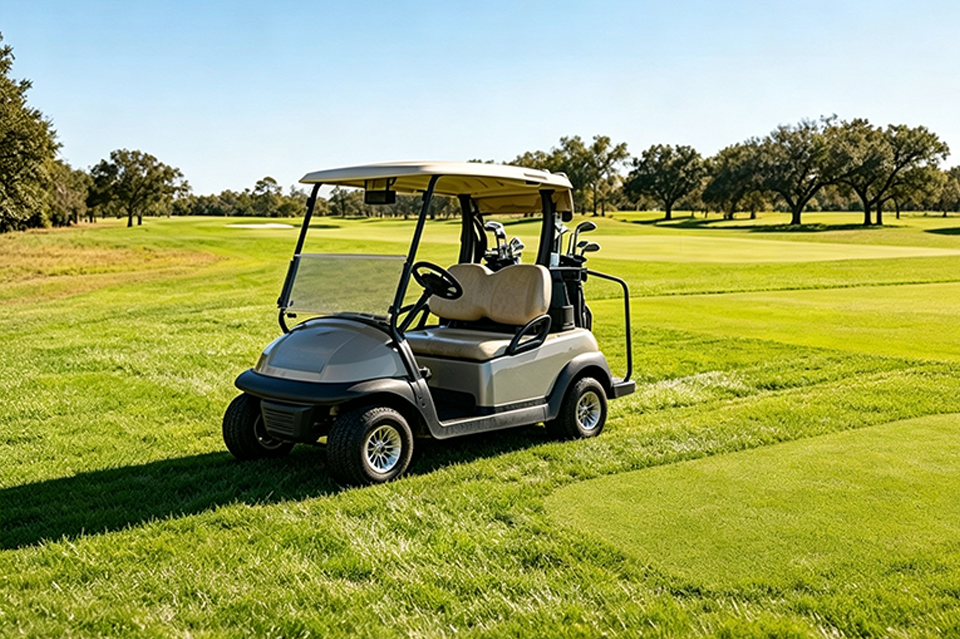
LiFePO4 outperforms lead-acid in every core index. Lead-acid only supports 300–500 charge cycles, takes 8–10 hours to charge, and weighs over 300 lbs for a 48V pack. Operators must regularly add distilled water and clean corroded terminals. Worse, voltage declines sharply as power drains, making climbing slow in the afternoon peak hours. In contrast, lithium iron phosphate boasts 2,000–4,000+ cycles, zero maintenance, and constant voltage output until nearly empty. Its lightweight design reduces vehicle load, eases motor wear and protects scenic turf.
Though lithium carries a higher upfront cost ($1,500–$3,000 vs lead-acid’s $600–$1,500), the 10-year total cost is far lower. Lead-acid fleets need 2–3 full replacements within a decade plus continuous maintenance fees, pushing total spending above $2,500. Lithium packs rarely need replacement, cutting long-term operating expenses drastically.
When purchasing, match your shuttle’s original voltage first: 36V for old 4-seat light carts, 48V as the universal mainstream model for 6–8 seat sightseeing vehicles, and 72V for heavy-duty 14-seat commercial fleets. For capacity, 80–100Ah fits casual low-traffic parks; 105Ah balances daily round trips and hilly terrain as the best all-around pick; 160Ah+ suits full-day resort operation with audio and lighting accessories.
All mainstream sightseeing vehicle brands support plug-and-play lithium upgrades. The intelligent built-in BMS acts as the battery’s core control system, realizing overcharge, over-discharge, short-circuit and temperature protection, plus automatic cell balancing. Premium models support Bluetooth real-time monitoring via mobile phones.
To extend battery life, charge after daily operation and avoid deep discharge below 20%. Use special lithium chargers and stop charging under 0°C. Store batteries at 50%–70% power if the vehicle sits idle for weeks. Equipped with automotive-grade LiFePO4 cells and smart BMS, GemRexs POWER sightseeing batteries are ideal for resorts, campuses and scenic spot fleets, bringing stable power and long-term cost savings.
-
EZGO Golf Cart Lithium Conversion Guide – GemRexs Power Drop-In Solutions
+Why Ditch Lead-Acid?
For decades, EZGO owners have put up with weekly water top-ups, corroded terminals, power sag on the back nine, and full battery replacement every 2–3 years. LiFePO₄ lithium completely outperforms lead-acid across every metric:
Weight: 250–300 lbs (lead-acid) vs. 55–70 lbs (lithium) – nearly 200 lbs of dead weight removed for snappier acceleration and extended range.
Cycle Life: 300–800 cycles vs. 3,000–5,000 cycles – lithium lasts 8–10 years.
Charge Time: 8–12 hours vs. 2–4 hours.
Maintenance: Weekly watering vs. zero routine maintenance.
Voltage Stability: Lead-acid sags as it drains; lithium delivers flat voltage until nearly empty.
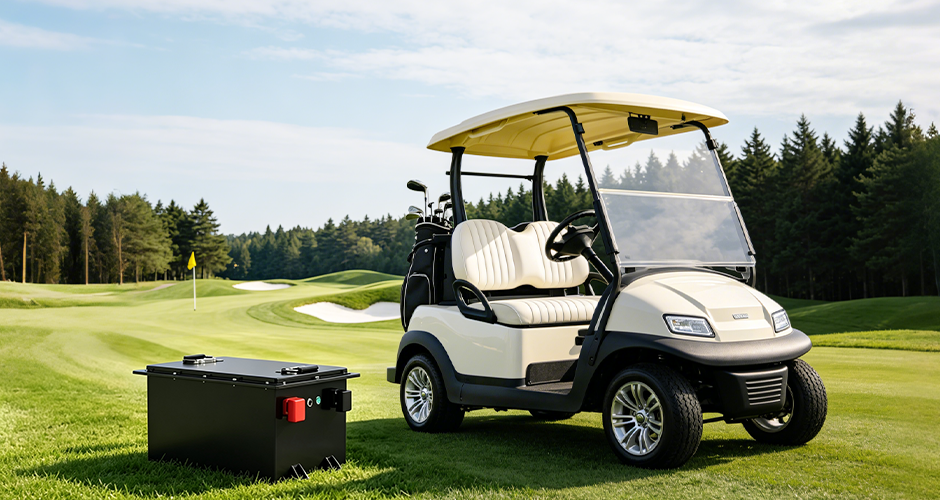
Know Your EZGO: Voltage & Compatibility
EZGO splits into two main voltage platforms:
Cart Type Voltage Original Setup Lithium Pack Pre-2000 TXT 36V Six 6V batteries One 36V drop-in pack Post-2000 TXT, RXV, S4 48V Six 8V or four 12V One 48V drop-in pack Check your serial number (inside glove box or under passenger cupholder) to confirm model year and voltage before purchasing.
OBC & CAN-Bus – Critical for RXV Models
Pre-2018 RXV (analog): Requires an OBC bypass harness to transfer charging control from the On-Board Computer to the battery's BMS. Without it, the OBC's equalization cycles will damage lithium cells.
Post-2018 RXV & S4 (factory-lithium): These models rely on CAN-bus communication. Generic batteries without CAN-compatible BMS trigger faulty dash readings, error codes, or limited power output.
GemRexs Power batteries feature CAN-ready intelligent BMS – seamless integration with modern EZGO electrical systems, no error codes, no functionality loss.
Capacity Selection – Match Your Usage
Capacity Best For Range 80–100Ah Casual weekend golfers, flat terrain 25–30 miles 105Ah Universal sweet spot – most moderate courses 30–40 miles 160Ah+ Commercial fleets, hilly layouts, accessory-heavy carts 50+ miles Step-by-Step Conversion (DIY – 2 to 4 Hours)
Confirm voltage – Count your batteries (six 6V = 36V; six 8V or four 12V = 48V).
Get a complete kit from GemRexs Power – battery, lithium charger, OBC bypass (if needed), hardware, and SOC gauge.
⚠️ Never reuse old lead-acid chargers – their equalization cycles permanently damage lithium cells.Disconnect negative first, remove old batteries, and recycle them properly.
Prep the tray – trim plastic dividers for a flat surface and clean away corrosion.
Secure the lithium pack, double-check polarity, and install the OBC bypass harness if applicable.
Connect the dedicated lithium charger and fully charge the pack.
Test – verify dash readouts, motor power, and driving range.
10-Year Cost Breakdown
Cost Item Lead-Acid Lithium Initial Battery Cost $800–$1,500 $1,500–$3,000 Replacements (10 yrs) 2–3 times Once Maintenance (10 yrs) $500–$1,000 $0 Charger $100–$200 $200–$400 (one-time) Total 10-Year Cost $3,000–$6,000 $1,700–$3,400 Break-even occurs within 3–5 years. Plus, lithium-converted EZGO carts hold significantly higher resale value – buyers actively avoid lead-acid upkeep.
Why GemRexs Power
Drop-in fitment for 36V, 48V and 72V EZGO – no fabrication needed.
CAN-ready intelligent BMS – fully compatible with post-2018 factory-lithium models.
OBC bypass harness included for pre-2018 RXV conversions.
8-year warranty / 3,200+ cycle rating.
Bluetooth monitoring via GemRexs Link App – real-time voltage, SOC, and fault alerts from your phone.
Ready to convert? Browse our EZGO-specific battery models or contact our team for personalized guidance based on your cart's serial number and usage profile.
GemRexs Power – Systematized. Reliable. Efficient.
-
What can I use a Lithium Battery for?
+Our Batteries are commonly used in golf carts, forklifts, aerial work platforms, floor cleaning machines, etc. We are dedicated to lithium batteries for over 10 years, so we are professional in lithium-ion replacing lead-acid field. What ’more, it can be applied in energy storage solutions in your home or power your truck air-conditioning.
-
What is the life expectancy of the battery?
+GemRexs POWER batteries can be used around 3,500 life cycles. Battery design life is around 10 years, and we offer you 5 years warranty. Therefore, even though there is more upfront cost with a GemRexs POWER LiFePO4 Battery, the upgrade saves you up to 70% battery cost over 5 years.
-
What is a BMS? What does it do and where is it located?
+BMS is short for Battery Management System. It’s like a bridge between battery and users. The BMS protects the cells from getting damaged — most commonly from over or under-voltage, over current, high temperature or external short-circuiting. The BMS will shut off the battery to protect the cells from unsafe operating conditions. All RoyPow batteries have built-in BMS to manage and protect them against these types of issues.
The BMS of our forklift batteries is a high-tech innovative design made to protect the lithium cells. Features Include: Remote monitoring with OTA (over the air), Thermal management, and multiple protections, such as Low Voltage Protection Switch, Over Voltage Protection Switch, Short Circuit Protection Switch, etc.
-
How safe are Lithium-lon Batteries?
+Our LiFePO4 batteries are considered to be safe, non-flammable and non-hazardous for superior chemical and mechanical structure.
They can also withstand harsh conditions, be it freezing cold, scorching heat or rough terrain. When subjected to hazardous events, such as collision or short-circuiting, they won’t explode or catch fire, significantly reducing any chance of harm. If you’re selecting a lithium battery and anticipate use in hazardous or unstable environments, LiFePO4 battery is likely be your best choice. It’s also worth mentioning that they are non-toxic, non-contaminating and contain no rare earth metals, making them environmentally conscious.
-
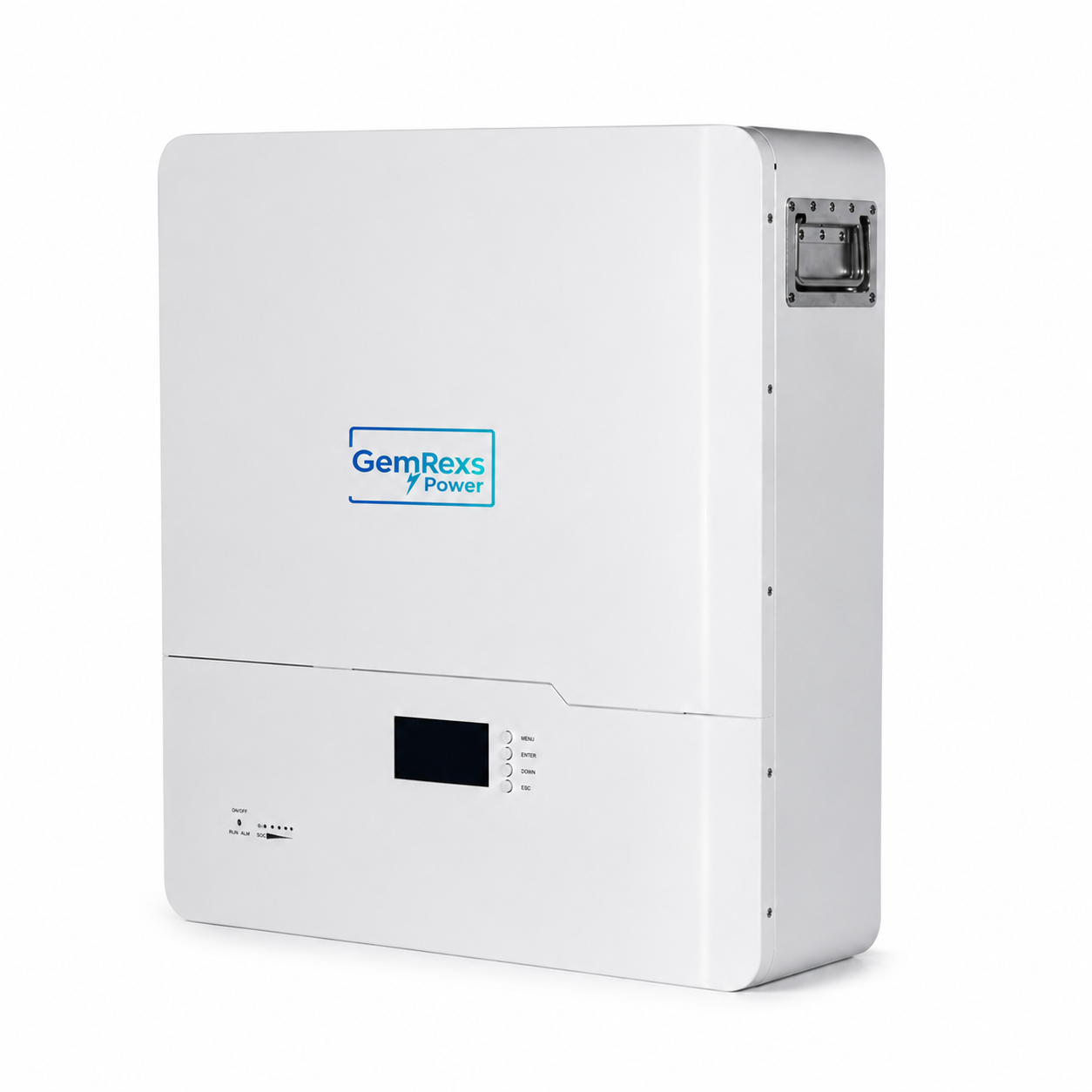
51.2V 100Ah
51.2V 100Ah
5kWh Wall Mounted Lithium Battery for Household Energy Storage
-
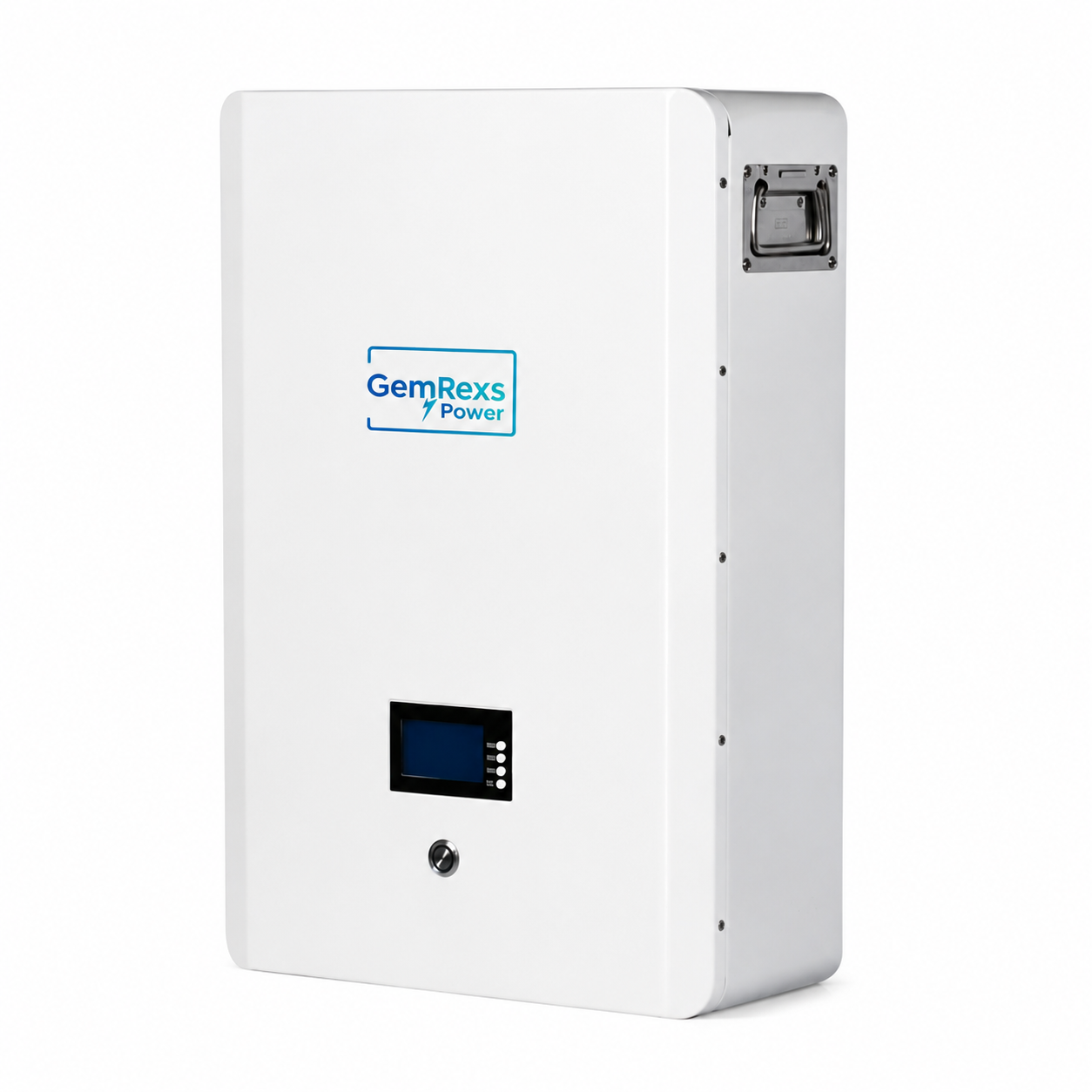
51.2V 200Ah
51.2V 200Ah
10kWh Wall Mounted Lithium Battery for Household Energy Storage


Subscribe to our newsletter
Receive timely updates, professional insights and brand activities of GemRexs Power solutions.
Tips: For after-sales inquiry please submit your information here.


